
The number of floors in a villa affects much more than its appearance. It determines how rooms are organised, how family members move through the home, how privacy is managed and whether the property will remain comfortable as household needs change.
A single-level villa keeps the principal living spaces on one floor. A multi-level villa distributes rooms across two or more floors. Both layouts can work well, but they solve different household requirements.
The right option depends on who will live in the home, how much privacy they require, how frequently they use stairs and how they expect the family to change over time.
What Is a Single-Level Villa?
A single-level villa places the primary rooms on one floor. The living room, kitchen, dining area, bedrooms and bathrooms are usually accessible without using an internal staircase.
Some single-level villas may include a small terrace structure, utility level or staff space. However, the main family functions remain on the ground level.
A single-level layout may be suitable for:
- Families living with elderly parents
- People with limited mobility
- Households with young children
- Buyers who prefer easy movement between rooms
- Families that do not need extensive separation between private and shared areas
- Buyers planning for long-term accessibility
Because all the rooms are distributed horizontally, a single-level villa may require a larger building footprint to provide the same internal area as a multi-level villa.
What Is a Multi-Level Villa?
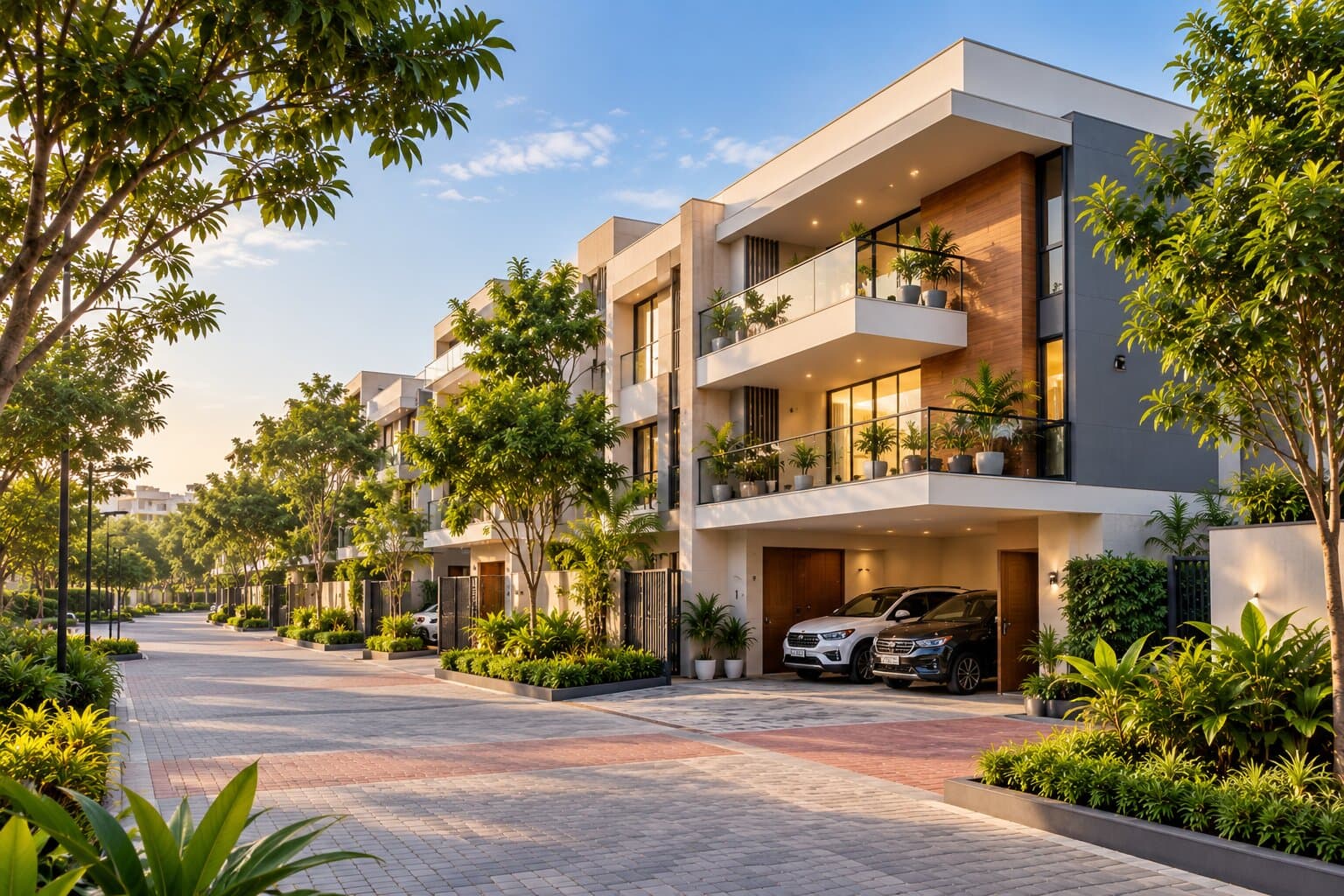
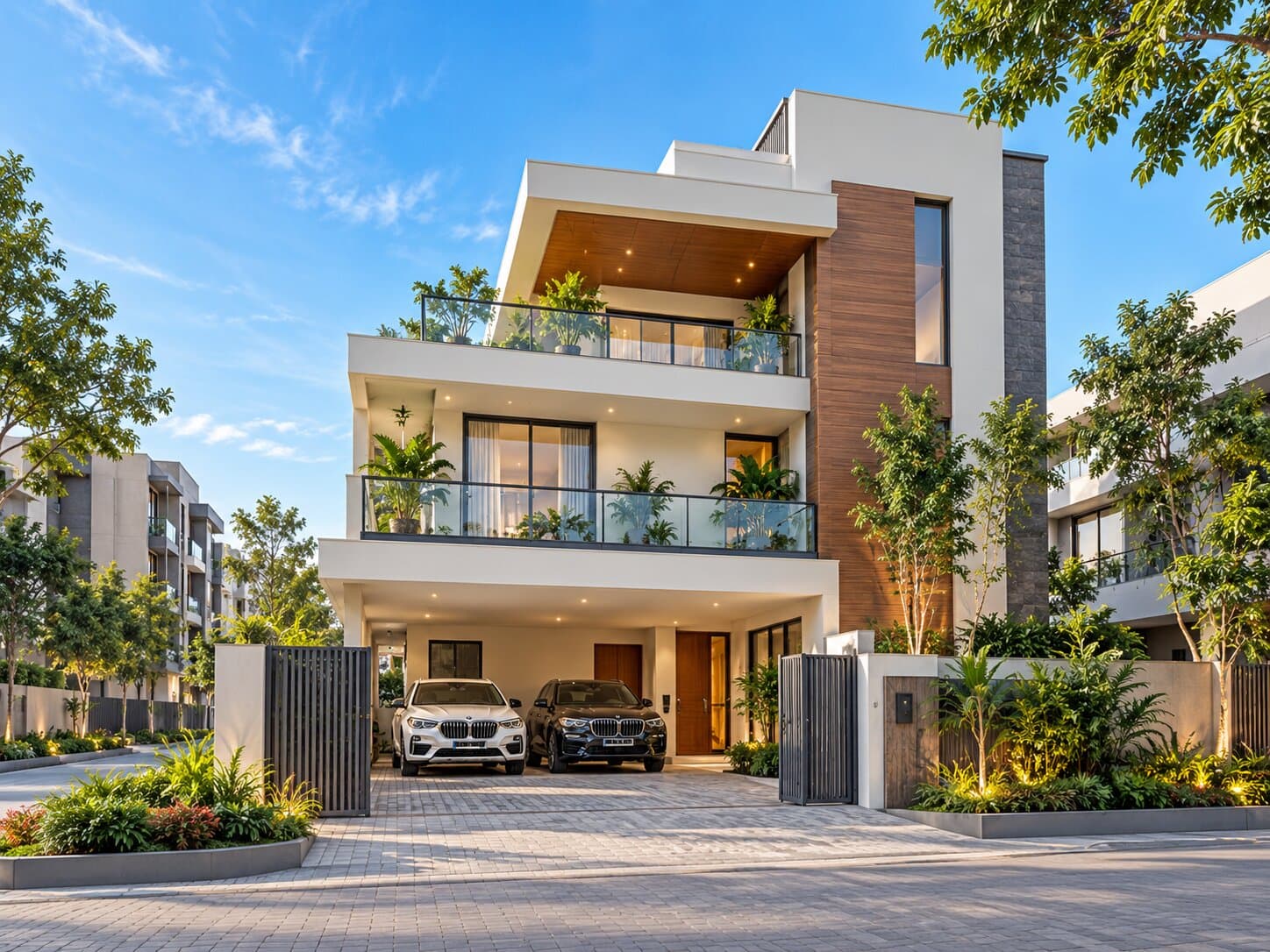
A multi-level villa distributes the rooms across two or more floors. The ground floor often contains the living, dining and kitchen areas, while bedrooms are placed on upper floors.
Larger villas may include an entertainment room, home office, terrace lounge, staff room or additional bedroom on another level.
A multi-level layout may suit:
- Larger families requiring more bedrooms
- Multigenerational households that need separate zones
- Buyers seeking greater privacy between rooms
- Families wanting dedicated work or entertainment floors
- Properties built on comparatively compact plots
- Households comfortable using stairs regularly
Multi-level planning allows more internal area to be created without covering the entire plot at ground level. It may therefore preserve space for parking, setbacks or a private garden.
Compare Horizontal and Vertical Living
The main difference between the two formats is how the household moves through the home.
In a single-level villa, movement is primarily horizontal. Family members can travel between the kitchen, living area and bedrooms without changing floors.
In a multi-level villa, daily activities involve vertical movement. A person may begin the day in an upstairs bedroom, move to the ground-floor kitchen and return upstairs several times for clothes, work items or personal belongings.
Neither movement pattern is automatically inconvenient. The impact depends on the family’s habits.
Before deciding, consider:
- How many times family members may use the stairs every day
- Whether elderly parents will live in the villa
- Whether young children need supervision between floors
- Where laundry and storage are located
- Whether family members frequently carry items between levels
- How the house will function during illness or temporary injury
Walk through a model villa while imagining a complete day rather than only viewing each room separately.
Accessibility for Elderly Family Members
Accessibility is one of the strongest reasons to consider a single-level layout. Elderly residents can access bedrooms, living areas, dining spaces and outdoor areas without depending on stairs.
However, a multi-level villa can still accommodate parents if it has a well-planned ground-floor bedroom with an attached bathroom.
A suitable ground-floor suite should provide:
- Convenient access from the entrance
- Easy movement to the living and dining areas
- An attached or nearby bathroom
- Adequate natural light and ventilation
- Space for wardrobes and seating
- Minimal floor-level differences
- Privacy from visitors and service areas
If the only ground-floor room is small, positioned beside a noisy entrance or designed mainly as a study, it may not function comfortably as a permanent bedroom.
Families exploring 4 BHK villas in Bangalore should check where the fourth bedroom is positioned and whether it can support long-term use by parents.
Safety for Families With Young Children
Single-level villas allow parents to supervise young children more easily because bedrooms and living spaces remain on one floor. There is also less dependence on stair gates and staircase barriers.
In multi-level villas, families should inspect:
- Railing height and gaps
- Stair tread depth
- Landing size
- Handrail position
- Lighting
- Floor finish
- Access to terraces
- Balcony railing design
An open staircase may look attractive but require additional safety measures. Highly polished steps can also become slippery.
Child-safety concerns may reduce as children grow, but the staircase will remain a permanent part of the home. Consider whether its design is suitable for all age groups rather than only the family’s current stage.
Privacy Within the Home
Multi-level villas can create clearer separation between shared and private areas.
Visitors can use the living and dining spaces on the ground floor while family bedrooms remain upstairs. A home office or entertainment space can also be placed on a separate level to reduce interruptions.
This separation may benefit:
- Adults working from home
- Teenagers who need study space
- Families hosting visitors frequently
- Households with live-in support staff
- Multigenerational families with different routines
- Family members working late or in shifts
A single-level villa may provide less physical separation, but privacy can still be achieved through thoughtful zoning. Bedrooms positioned away from the entrance and living room may remain private even when all rooms are on the same floor.
The quality of the floor plan matters more than the number of levels alone.
Family Connection and Everyday Interaction
While multi-level villas provide privacy, they can also divide the household into separate zones.
If children spend most of their time on an upper floor and parents remain downstairs, casual interaction may reduce. Family members may begin using different lounges or entertainment areas instead of sharing one common space.
Single-level villas often support more spontaneous interaction because rooms connect to the same living and dining areas. This can suit families that prefer a closely connected daily routine.
Before choosing a layout, discuss how much separation the family genuinely needs. A home should provide privacy without making household members feel isolated from one another.
Noise Movement Between Rooms and Floors
Noise behaves differently in each layout.
In a single-level villa, sound may travel directly between the living room and nearby bedrooms. The placement of walls, doors and passages becomes important.
In a multi-level villa, floors can separate activities, but open staircases and double-height living rooms may allow sound to travel vertically. A television on the ground floor may still be heard in upstairs bedrooms if the spaces are visually open.
Examine what is positioned above and below each room. A bedroom below an entertainment room or beside a staircase may experience regular disturbance.
Consider the needs of:
- Light sleepers
- Students
- People working from home
- Elderly parents
- Babies and young children
- Family members working night shifts
The best layout is one that places noisy and quiet activities in suitable zones.
Plot Size and Outdoor Space
A single-level villa generally requires more ground coverage to provide a large internal area. This may leave less plot area for gardens, side setbacks or parking.
A multi-level villa can accommodate more construction vertically. The smaller ground footprint may preserve a larger portion of the plot for outdoor use.
For example, two villas may provide similar built-up areas:
- A single-level villa uses most of the plot to accommodate rooms on one floor.
- A multi-level villa distributes the rooms across two floors and retains more ground-level open space.
However, this relationship will vary by project. Buyers should examine the actual plot plan rather than assuming a multi-level villa always has a larger garden.
Families comparing villas for sale in Bangalore should review both the floor plan and plot dimensions to understand how construction and outdoor space are balanced.
Cleaning and Household Maintenance
Single-level villas may be easier to clean because equipment and supplies do not need to be moved between floors. Daily household management can happen within one connected area.
Multi-level villas may require:
- Cleaning tools on more than one floor
- Additional time for stairs and landings
- Separate storage for household supplies
- More coordination for laundry
- Maintenance access to upper balconies and terraces
- Attention to multiple external wall levels
This does not mean that every multi-level home is difficult to maintain. A well-positioned laundry area, floor-wise storage and accessible service spaces can reduce the workload.
Think about who will manage the home and how often every room will be used. An additional floor that remains mostly empty may still require regular cleaning and upkeep.
Cooling and Energy Use
The number of floors can influence how different parts of the home are cooled and ventilated.
In a single-level villa, rooms are spread across a wider footprint. Heat exposure and air movement depend on the roof, window orientation and surrounding open space.
In a multi-level villa, the upper floor may receive more direct heat through the roof. Open staircases or double-height spaces may also affect how cooled air moves through the home.
Review:
- Roof insulation
- Window orientation
- Cross-ventilation
- Shading
- Double-height areas
- Staircase openings
- Floor-wise air-conditioning plans
- Natural light without excessive heat gain
Buyers considering luxury villas in Bangalore should ask how large open spaces and multiple levels are intended to be ventilated and cooled.
Storage Across Different Levels
A multi-level villa can provide more overall space but may distribute storage inconveniently.
If linens are stored downstairs while bedrooms are upstairs, family members must carry items between floors. Laundry areas placed far from the bedrooms can create a similar issue.
Check whether each level has suitable storage for the activities taking place there.
Useful locations include:
- Entry storage near the main door
- Pantry storage near the kitchen
- Linen storage near bedrooms
- Cleaning cupboards on each floor
- Terrace or outdoor furniture storage
- Space beneath the staircase
Single-level homes can centralise storage more easily, but they must still provide enough wardrobe and utility space without affecting room dimensions.
Hosting Guests
The better layout for guests depends on how often visitors stay and how much independence they require.
A multi-level villa may allow guests to use a ground-floor bedroom while the family retains private bedrooms upstairs. Alternatively, a guest suite on an upper floor can create separation from daily household activities.
A single-level home can make visitors feel more connected to the family, but guest-room placement must preserve privacy for both sides.
If guests visit only occasionally, do not allow a dedicated guest suite to dominate the decision. The room should serve another purpose—such as a study, hobby room or family lounge—when it is not occupied.
Buyers assessing 3 BHK villas in Bangalore should determine whether one bedroom can perform multiple roles without reducing the family’s permanent sleeping space.
Consider Future Lift Requirements
A lift may not appear necessary when the family first buys a villa. It can become useful later if parents move in, mobility changes or upper floors are used more frequently.
When reviewing a multi-level villa, ask:
- Is a lift already provided?
- Is structural provision available for a future lift?
- Where would the lift open on each floor?
- Would installation remove valuable room or passage space?
- How would maintenance be managed?
- Is the staircase still comfortable if the lift is unavailable?
Future lift provision can improve long-term flexibility, but it should not replace a practical staircase or a usable ground-floor bedroom.
Match the Layout to Your Family Stage
A villa should ideally remain useful through more than one stage of family life.
Young Couple
A multi-level villa may provide future flexibility but could contain more space than the couple currently needs. A single-level home may be easier to maintain.
Family With Young Children
A single-level layout can simplify supervision. A multi-level layout requires careful staircase and balcony safety.
Family With Teenagers
Separate bedroom or study zones in a multi-level villa may provide useful privacy.
Multigenerational Household
Either option can work. A single-level villa provides easy access, while a multi-level villa can separate generations if a complete ground-floor suite is available.
Older Couple
A single-level home may be easier to manage unless the multi-level villa includes a lift and all essential spaces on one floor.
These profiles are only starting points. Your household’s routine should guide the decision.
Use a Layout Decision Checklist
Choose a single-level villa if most of these statements apply:
- We want all essential rooms on one floor.
- An elderly or mobility-limited family member will live with us.
- We prefer easier supervision of young children.
- We do not require strong separation between family zones.
- We are comfortable with a larger ground footprint.
- We want simpler daily maintenance.
Choose a multi-level villa if most of these statements apply:
- We need more rooms on a limited plot footprint.
- Our family values separate private and shared zones.
- Household members have different routines.
- We want to preserve more ground-level open space.
- We are comfortable using stairs regularly.
- The layout provides a suitable ground-floor bedroom or lift provision.
Use this checklist only after examining the actual property. A well-designed multi-level villa can be more accessible than a poorly planned single-level home, and the reverse is also possible.
Conclusion
Single-level villas prioritise connected living, accessibility and easier movement. Multi-level villas can provide greater privacy, more internal space and clearer separation between household activities.
The right choice depends on the residents, not on which layout appears more impressive. Consider elderly family members, children, privacy, maintenance, storage, outdoor space and future mobility before deciding.
Review the complete floor plan and walk through the home as if you were following a normal day. This will show whether the villa’s levels support your family or create movement that may become inconvenient over time.
Frequently Asked Questions
1. Is a single-level villa better for elderly parents?
A single-level villa generally provides easier access because essential rooms do not depend on stairs. A multi-level villa may also work if it includes a complete ground-floor bedroom suite.
2. Do multi-level villas provide more privacy?
They can provide better separation between visitor, family and bedroom zones. However, privacy depends on room placement, staircase design and the overall floor plan.
3. Which villa type is easier to maintain?
Single-level villas may be easier to clean and manage because everything is on one floor. Maintenance requirements still depend on the villa’s total size, materials and outdoor areas.
4. Does a multi-level villa provide more garden space?
It may preserve more open space by distributing construction vertically, but this is not guaranteed. Buyers should compare the building footprint and actual plot plan.
5. Should I choose a villa with provision for a future lift?
Future lift provision can improve long-term accessibility in a multi-level home. Confirm its location, structural readiness, space requirements and maintenance implications before treating it as a benefit.